
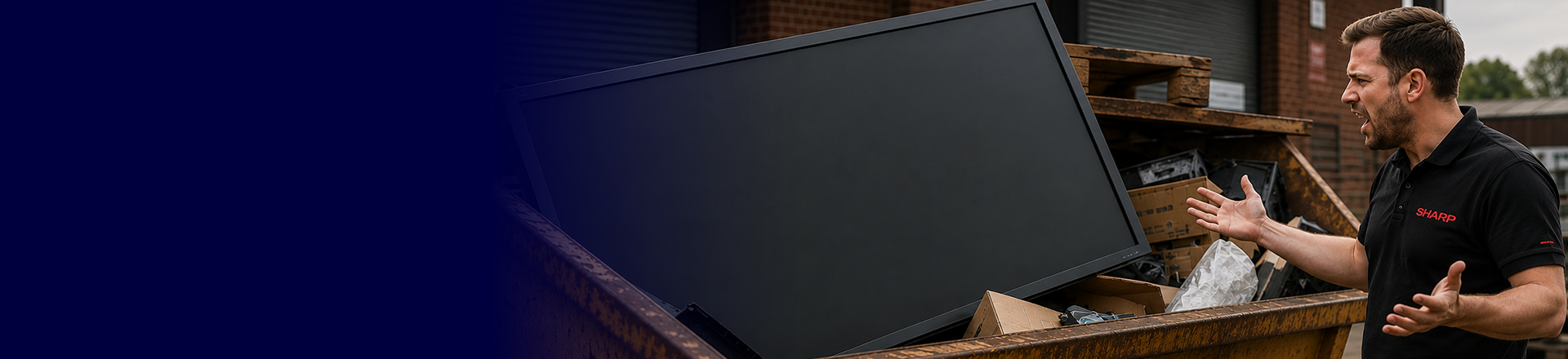
Digital signage is changing, and your display should be ready for it.
New technologies are transforming digital signage, enabling richer customer experiences, better insights and more intelligent content management. Artificial intelligence, audience analytics, retail media and cloud platforms are reshaping what's possible with digital signage.
But according to Nils Karsten, Business Segment Lead Retail at Sharp, the most valuable innovations aren't necessarily the ones making the biggest headlines.
"Every few years our industry introduces the next big thing. AI is the latest example. It's exciting, but customers aren't looking for technology for technology's sake. They want solutions that genuinely make their jobs easier."
For Nils, that's where the conversation should begin.
The question isn't "How much can we add?" It's "How can we help organisations communicate more effectively through digital signage, while giving them the flexibility to evolve over time?"
Nils Karsten, Business Segment Lead Retail, Sharp Display Solutions Europe

Digital signage is no longer a single solution
Digital signage deployments rarely operate in isolation. Displays are expected to work seamlessly with content management systems, media players, audience analytics and business applications, while increasingly supporting AI tools.
Rather than trying to do everything in-house, the display manufacturer should provide the hardware technology that brings the different elements of a digital signage solution together. The display sits at the centre, connecting the technologies, software and applications around it.
"Customers don't expect the manufacturer to engineer every part of the solution," says Nils. "Ideally, they have the freedom to choose each element, from the content management system and media player to additional tools, that best fits their business. Our role is to bring those technologies together on a reliable display, working with trusted partners to deliver a solution that's straightforward to deploy, manage and adapt over time."
Sharp certainly offers simple, ready-to-use solutions that make it easy to get started. But as projects become larger and more complex, an open ecosystem approach gives customers greater flexibility, bringing together professional displays, computing and software from leading technology partners. This means customers can benefit from validated solutions today while retaining the freedom to adopt new capabilities as their requirements evolve.
Why modularity matters
Professional displays are designed for long-term use. In many cases, they can continue delivering strong visual performance beyond the lifetime of the computing technology.
"We've seen projects where our displays are still performing brilliantly more than 15 years after installation," says Nils. "That was always the thinking behind modularity. The display is designed for the long term, while the operating system or media player can be refreshed as requirements change."
Rather than replacing the entire display, organisations can update the compute module (based on Raspberry Pi, Intel, Brightsign or Matrox), extending the life of the screen while keeping pace with new software, security requirements and AI capabilities.
"I see it as the best of both worlds. You keep the clean, cable-free appearance of an embedded compute solution, but you’re not locked into a system-on-chip with a CPU permanently built into the display. The compute can be upgraded as requirements change."
It's an approach that protects investment and can help reduce unnecessary waste by giving organisations the flexibility to embrace future innovations without replacing the display hardware that's still performing exactly as it should.
“That said, it really depends on the client, the installation and the budget. For some rollouts, we would also recommend a SoC system, such as our MultiSync®ME Series with built-in Android,” Nils confirms.
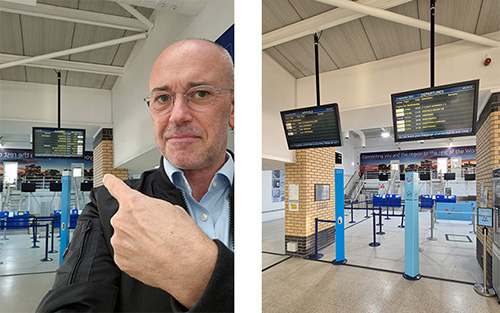
14-year-old MultiSync Displays at Humberside Airport, still providing excellent service.
Technology should give customers freedom
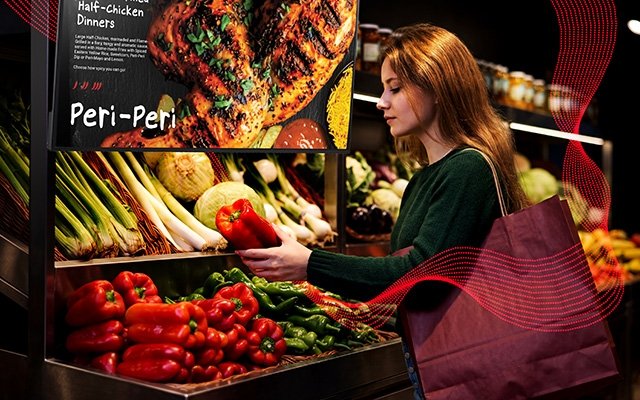
Organisations will expect more from their digital signage system in the future. Rather than locking customers into a proprietary operating system, Sharp's open ecosystem approach gives organisations the freedom to choose the technologies that best meet their needs today, while remaining ready for tomorrow.
Sharp's support for the latest Raspberry Pi Compute Module 5 is a prime example of this approach. Upgrading the embedded compute platform enables organisations to benefit from new processing capabilities. It's not about predicting what's next. It's about making sure your display is ready for it.
"Customers shouldn't have to choose between innovation and protecting their investment," concludes Nils. "If we've done our job well, they'll have a display that supports both. That's what gives a digital signage deployment the flexibility to evolve with changing technology.”
The best digital signage investments aren't the ones with the longest feature list. They're the ones that continue delivering value as technology and business needs evolve.